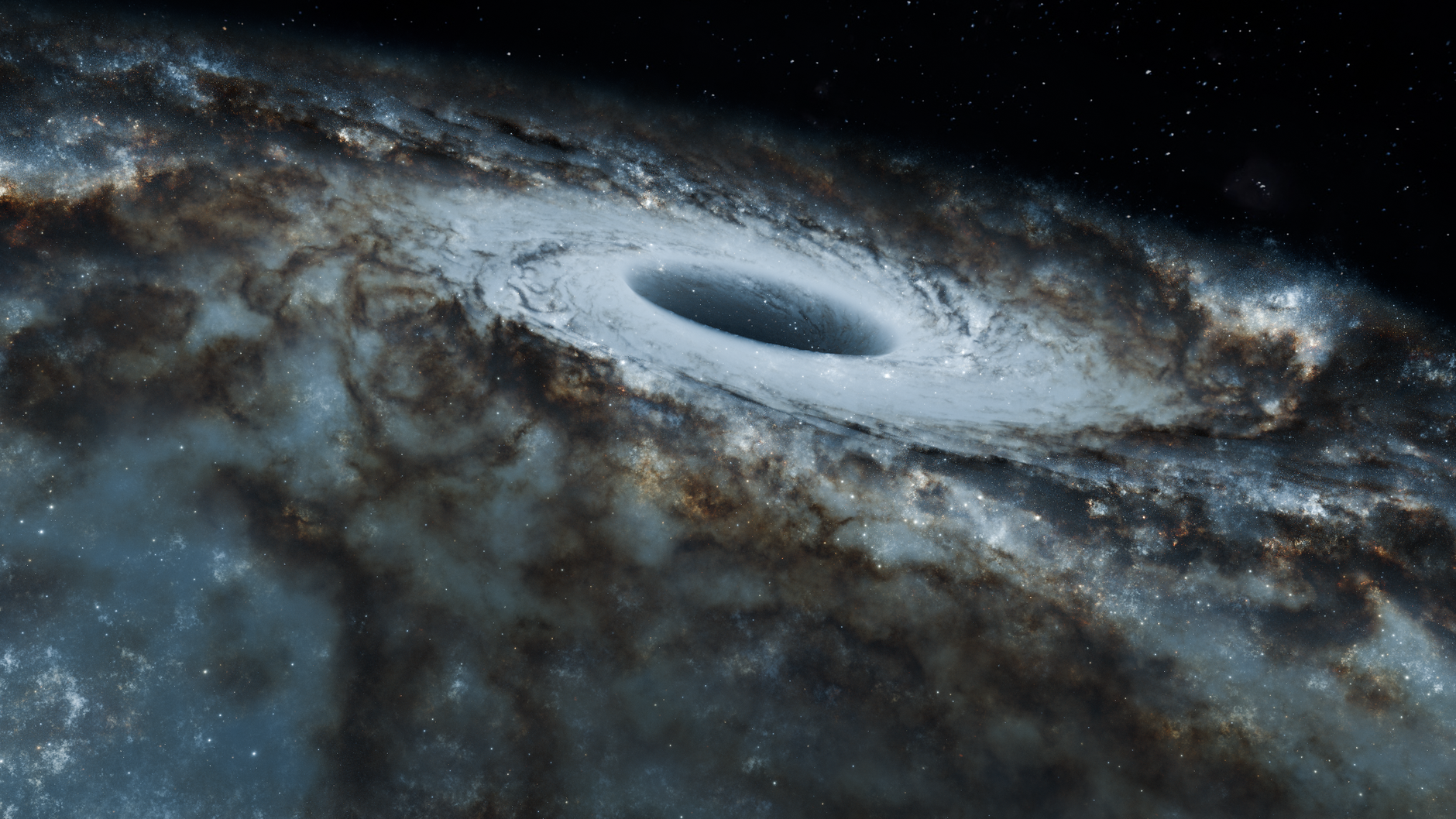
Astronomers Unveil a Black Hole Star: A Groundbreaking Discovery
In an exciting leap for astrophysics, astronomers have made a remarkable discovery that could reshape our understanding of the universe. Utilizing the powerful James Webb Space Telescope (JWST), researchers have identified a celestial object that may represent a new class of star-like entities known as “black hole stars.” This intriguing find provides potential explanations for the enigmatic red spots observed in the early universe.
The discovery was sparked by the observation of an unusual object, which displayed characteristics that blurred the lines between traditional stars and black holes. This object, situated in the depths of space, has properties that suggest it could be a massive star that has collapsed into a black hole, yet somehow retains its stellar outer appearance. The implications of this finding are profound, as it challenges established theories about stellar formation and the lifecycle of massive stars.
The JWST has opened new frontiers in astronomy with its advanced capabilities, allowing scientists to peer further into the cosmos than ever before. This instrument’s infrared technology is adept at capturing the light of distant objects, which is crucial for examining the early universe. The red spots in question, which have puzzled astronomers for years, are believed to be the remnants of early star formation and possibly the sites of these black hole stars.
Researchers posit that these black hole stars could have formed in the extreme conditions present shortly after the Big Bang, where dense regions of matter collapsed under their own gravity. Unlike typical stars that fuse hydrogen into helium, these black hole stars may have unique characteristics that allow them to exist in a state that is neither fully one nor the other. This has led to discussions about the potential role they play in cosmic evolution and the formation of galaxies.
The discovery of black hole stars not only deepens our understanding of the universe’s early days but also raises new questions. How common are these objects? What do their properties reveal about the conditions that existed in the primordial universe? As scientists continue to study this enigmatic find, they hope to unravel the mysteries surrounding the formation of stars and black holes.
This groundbreaking research underscores the importance of the JWST in revolutionizing our view of the cosmos. As astronomers continue to explore the universe’s hidden corners, the findings from this remarkable telescope promise to illuminate the origins of cosmic structures and enhance our grasp of the fundamental processes that govern the universe. With each observation, the frontier of knowledge expands, bringing us closer to understanding the intricate tapestry of space and time.