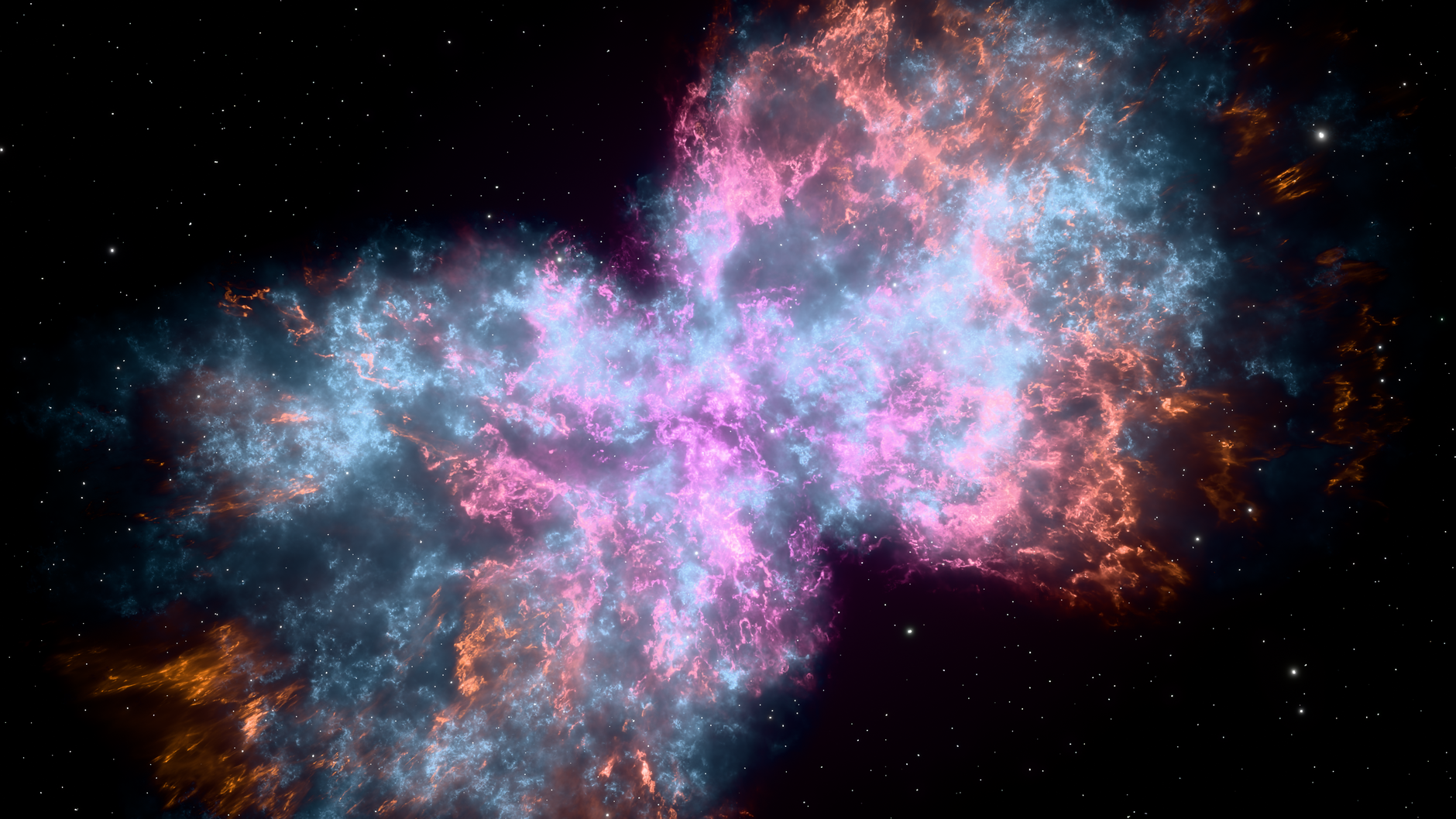
Humans Watched This Supernova Explode Nearly a Millennium Ago. Now You Can See It in High Definition
A breathtaking new image of a supernova that captivated human observers nearly a thousand years ago has been unveiled, providing not only a stunning visual but also important insights into stellar evolution. The supernova, known as SN 1054, was first observed in the year 1054, and its remnants now form the well-known Crab Nebula, a source of endless fascination for astronomers and stargazers alike.
The latest high-definition image of the Crab Nebula showcases intricate details of the remnants from this cosmic explosion, which is believed to have been the result of a massive star exhausting its nuclear fuel and collapsing under its own gravity before exploding. This event was so bright that it was visible even during the daytime for weeks, leaving a lasting impression on cultures around the world, including the Chinese, who recorded the phenomenon in their historical texts.
The newly captured image reveals a wealth of information about the remnants of this historic supernova, including the structure of the nebula and the distribution of elements produced during the explosion. Researchers are particularly excited about the clarity of the image, which allows them to study the interaction between the ejected materials and the surrounding interstellar medium. This detail is crucial for understanding the processes that govern stellar life cycles and the evolution of galaxies.
One of the most intriguing aspects uncovered by this new image is the evidence that some of the elements produced during the supernova have survived the explosion itself. This challenges previous assumptions about the fate of materials in such violent cosmic events. Scientists are now investigating how these elements have endured and what implications this has for the study of supernovae and their remnants.
Moreover, the Crab Nebula continues to be a rich source of scientific inquiry. It hosts a pulsar, a rapidly spinning neutron star that emits beams of radiation, making it a key target for astrophysical research. The combination of the pulsar and the surrounding nebula creates a unique laboratory for scientists to explore fundamental questions about the universe.
As technology advances, the ability to capture these cosmic phenomena in greater detail becomes increasingly achievable. High-definition imaging techniques are not only enhancing our understanding of past events like SN 1054 but also paving the way for future discoveries in the cosmos. With every new image, researchers inch closer to unraveling the mysteries of the universe, bringing us a step closer to understanding the life cycles of stars and the intricate tapestry of the cosmos.
As we gaze upon this magnificent supernova remnant, we are reminded of the interconnectedness of our past and the universe’s ongoing evolution, inspiring both awe and curiosity about what lies beyond our world.