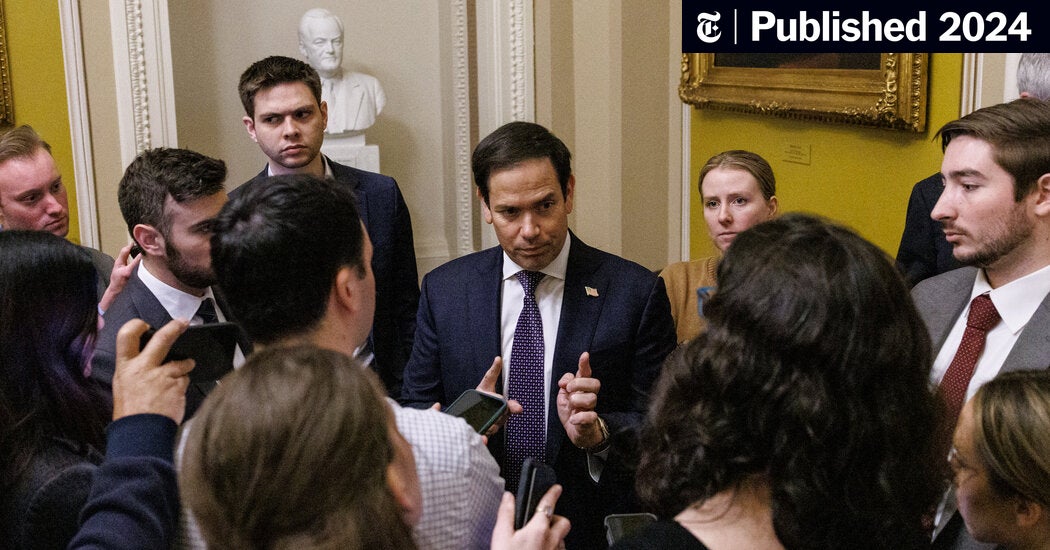
Rubio Anticipates Open Dialogue with Pope Amid Tensions with Trump
In a significant diplomatic visit to the Vatican this week, U.S. Secretary of State Marco Rubio is preparing for a candid discussion with Pope Leo. This meeting comes in the wake of recent comments made by President Donald Trump, who has publicly criticized the Pope’s stance on the U.S. military intervention in Iran.
Brian Burch, the U.S. ambassador to the Holy See, emphasized the importance of open communication between nations, particularly when disagreements arise. He remarked, “Nations have disagreements, and I think one of the ways that you work through those is through fraternity and authentic dialogue.” This sentiment reflects a desire for constructive engagement, despite the backdrop of political tensions.
The relationship between the Vatican and the U.S. has been notably complex, particularly during Trump’s presidency. The Pope has previously voiced concerns regarding U.S. foreign policy, particularly its implications for peace and humanitarian issues. Trump’s recent remarks, which included sharp critiques of the Pope’s viewpoints, have raised questions about the future of dialogue between the two leaders.
During Rubio’s visit, he is expected to address a range of topics, including the U.S.-Iran conflict, which has seen heightened tensions in recent months. The Secretary of State aims to convey the U.S. position while also seeking the Pope’s perspective on global peace efforts and humanitarian concerns. Observers note that this meeting could serve as a pivotal moment for reassessing the relationship between the Vatican and the current U.S. administration.
The Pope’s advocacy for peace and dialogue is seen as a counterpoint to the more aggressive foreign policy strategies that have characterized recent U.S. actions. By fostering a spirit of fraternity, Rubio hopes to navigate these contentious issues and find common ground that can benefit both nations and the broader international community.
As the meeting approaches, many are looking to see how both leaders will address their differences. The outcome of their discussions could have implications not only for U.S.-Vatican relations but also for the global community’s approach to conflict resolution and diplomacy. The emphasis on dialogue and fraternity, as highlighted by Ambassador Burch, suggests a willingness to engage in meaningful conversations that could bridge gaps between differing viewpoints.
Overall, Rubio’s anticipated meeting with Pope Leo is being closely watched as a potential turning point in U.S.-Vatican relations, particularly in the context of ongoing global conflicts and the need for collaborative solutions.