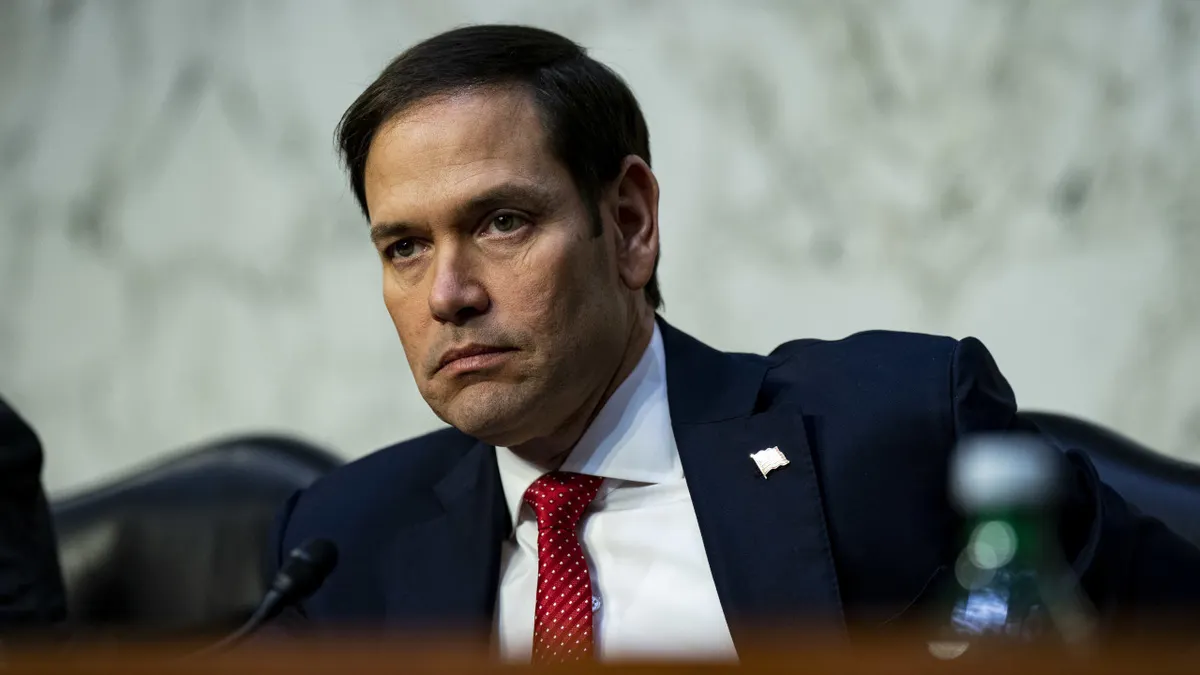
Rubio Urges G7 Support for Reopening of Strait of Hormuz Amid Tensions with Iran
U.S. Secretary of State Marco Rubio has called on the Group of Seven (G7) nations to advocate for the reopening of the Strait of Hormuz, a crucial maritime passage currently facing disruptions due to tensions with Iran. Speaking before his departure to France for a G7 foreign ministers’ meeting, Rubio emphasized the collective interest of G7 countries in ensuring the free flow of commerce through this vital waterway.
Rubio stated, “It’s in their interest to help,” highlighting the strategic importance of the Strait of Hormuz, which serves as a key route for oil shipments and global trade. The Secretary of State’s remarks come in the wake of escalating tensions in the region, particularly following recent military actions involving the United States and Israel against Iranian targets.
The Strait of Hormuz, located between Iran and Oman, is a narrow passage that has historically been a hotspot for geopolitical conflicts. Approximately one-fifth of the world’s oil supply passes through this strait, making its security vital not only for regional stability but also for global energy markets. The ongoing blockade by Iranian forces has raised concerns among energy-dependent nations about potential disruptions and increased prices.
Rubio’s comments resonate with the broader international call for maintaining open sea lanes and ensuring that freedom of navigation is upheld. The discussions at the G7 meeting are expected to revolve around strategies for addressing the Iranian threat, enhancing maritime security, and reinforcing alliances among member nations.
This trip marks Rubio’s first international engagement since the U.S. and Israel conducted airstrikes on Iranian positions on February 28, an event that has further strained relations in the Middle East. As tensions rise, the Secretary of State’s emphasis on multilateral cooperation reflects a commitment to addressing security challenges through diplomatic channels.
In addition to the Strait of Hormuz, the G7 foreign ministers are likely to discuss a range of issues, including economic sanctions against Iran, the ongoing conflict in Ukraine, and global health initiatives. The outcomes of these discussions could have significant implications for international relations and security policies moving forward.
As G7 nations navigate these complex challenges, Rubio’s push for a united front underscores the importance of collaboration in addressing threats to stability and security in the region. The meeting in France will serve as a critical platform for member states to align their strategies and reinforce their commitment to protecting vital trade routes like the Strait of Hormuz.