Trump Invokes Religious Rhetoric in Praise of Iran Rescue, Drawing Criticism
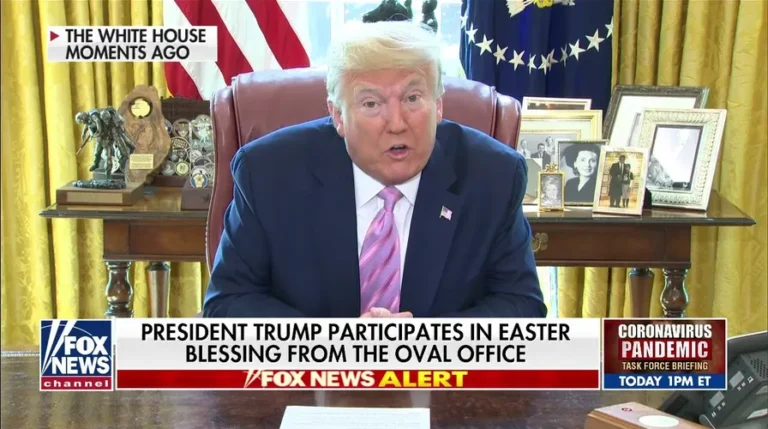
In a recent address, President Donald Trump and several officials from his administration characterized the rescue of a U.S. airman in Iran as an “Easter miracle.” This framing has stirred controversy as it intertwines religious themes with military actions, prompting debates over the appropriateness of such rhetoric in the context of U.S. foreign policy.
The operation, which successfully retrieved the airman, was highlighted by Trump as a divine endorsement of the U.S. military’s efforts in the region. During his remarks, he emphasized the significance of the timing, occurring on Easter Sunday, and positioned the rescue within a narrative of righteousness and divine favor. Such language has raised eyebrows among critics who argue that using religious language to describe military operations can blur the lines between faith and governmental policy.
Historically, U.S. administrations have generally opted for neutral, traditional messages during holidays such as Easter, focusing on themes of peace and unity without directly linking them to military endeavors. This year’s approach marks a departure from that norm, as officials appeared to deliberately connect religious connotations to the military’s actions, suggesting a justification for ongoing conflicts in the Middle East.
Critics of the administration’s rhetoric have voiced concerns that framing military operations in religious terms could lead to a more polarized environment, where actions are viewed through a lens of divine approval rather than strategic necessity. Some argue that such narratives may resonate with certain segments of the population but could also alienate those who believe in a separation between church and state, especially in a diverse country like the United States.
This development has sparked discussions within the Arab-American community and beyond, as individuals reflect on the implications of intertwining faith with military interventions. Many community members have expressed unease about how such rhetoric could affect perceptions of Muslims and Middle Eastern cultures in the wider American society. They contend that emphasizing religious justifications could reinforce stereotypes and exacerbate divisions.
While some supporters of the administration may find comfort in the religious framing, opponents warn of the potential consequences for diplomatic relations and the broader implications for U.S. engagement in the Middle East. As the discourse continues, it remains to be seen how this approach will affect both domestic sentiments and international relations moving forward.
The use of religious rhetoric in political contexts, especially regarding military operations, is likely to remain a topic of heated debate, underscoring the complexities of balancing faith, policy, and the realities of global conflict.