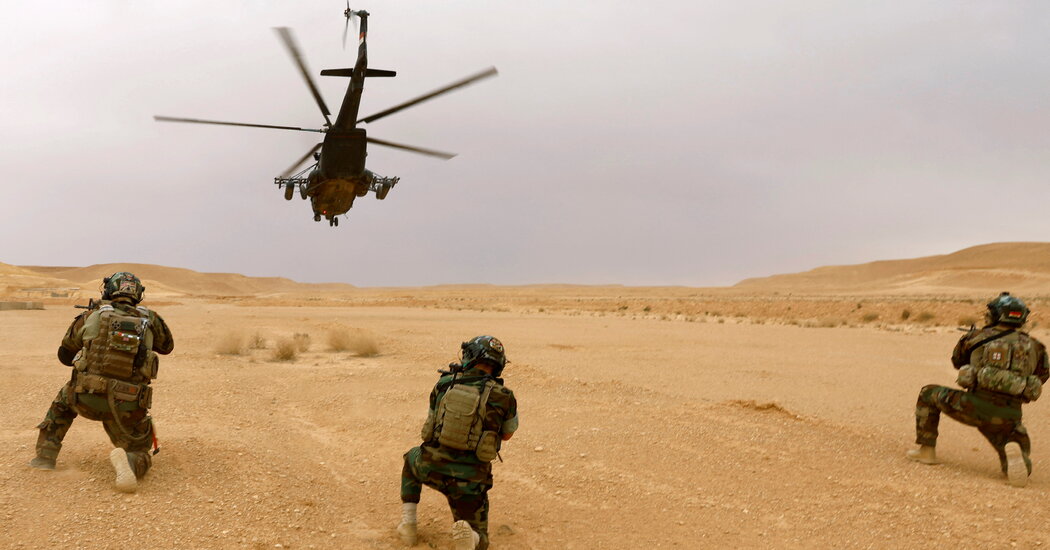
US Commandos Conduct Operation in Iran to Rescue Downed Airman
Reports from various American media outlets indicate that U.S. special forces undertook a significant mission deep within Iranian territory to rescue a downed airman. This operation came shortly after President Donald Trump announced the successful recovery of the crew member, who is now reported to be “safe and sound.”
The situation escalated when Iran claimed to have shot down an F-15 fighter jet, marking the first instance of a U.S. aircraft being downed within its borders since the onset of the ongoing conflict. While the Iranian government has provided details regarding the incident, U.S. officials have yet to confirm the circumstances surrounding the downing of the aircraft.
The mission to recover the airman reportedly involved highly coordinated efforts, showcasing the capabilities and readiness of U.S. special operations forces. In the wake of the airman’s successful extraction, U.S. officials have remained tight-lipped about the specifics of the operation, likely due to the sensitive nature of military engagements in hostile territories.
The incident has raised concerns about the escalating tensions between the United States and Iran. Since the beginning of hostilities, both countries have been engaged in a series of confrontations, which have only intensified fears of a broader conflict in the region. The downing of the F-15 jet could potentially serve as a flashpoint, prompting further military responses or diplomatic negotiations.
Iran’s military response has been characterized by a mixture of defiance and caution. While the Iranian leadership has expressed pride in their ability to defend their airspace, there is an underlying awareness of the potential repercussions of further military actions against U.S. forces. The situation remains delicate, with both nations weighing their next moves carefully.
In addition to the military implications, the incident has sparked discussions among analysts regarding the strategic significance of such operations. The ability for U.S. forces to conduct operations within Iranian territory may influence future military planning and responses by both sides. Observers are closely monitoring how this event may alter the dynamics of U.S.-Iran relations, particularly in light of ongoing negotiations regarding nuclear capabilities and other regional issues.
As both nations navigate this complex landscape, the international community continues to call for restraint. The hope is to avoid further escalation and to find a diplomatic resolution to the tensions that have plagued the region for years. The situation remains fluid, and updates are expected as more information becomes available from both U.S. and Iranian sources.