Red-tailed Hawks: A Closer Look at Their Unique Eye Protection
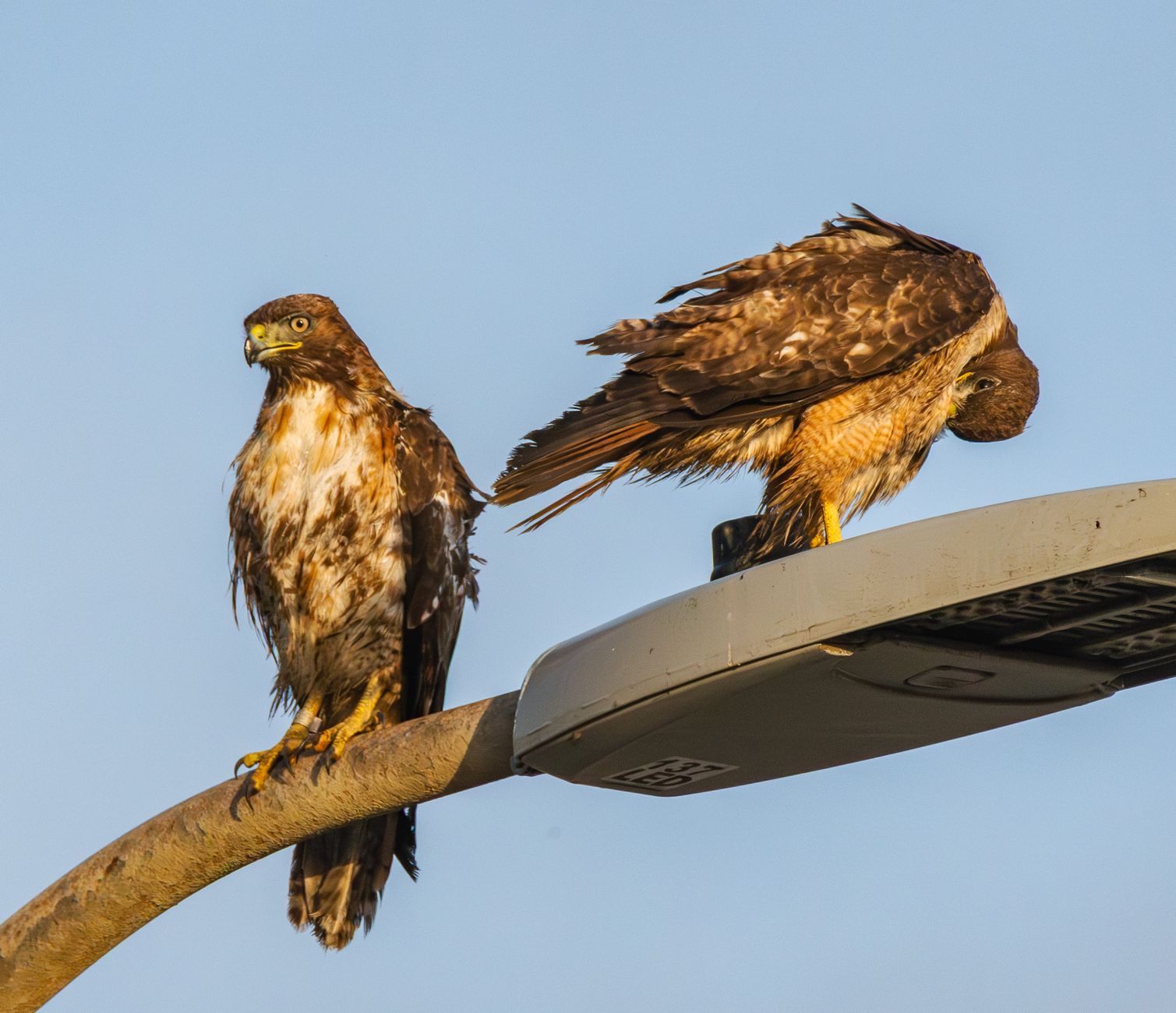
Red-tailed hawks, a familiar sight soaring through Ohio’s skies, possess remarkable adaptations that enhance their hunting capabilities. One such adaptation is their distinctive third eyelid, known as the nictitating membrane. This transparent eyelid plays a crucial role in protecting their eyes during fast-paced hunting scenarios and is a feature shared with various reptiles and mammals.
As these majestic birds dive and glide at impressive speeds while searching for prey, the nictitating membrane acts like a shield. When the hawk is in pursuit, this membrane can swiftly cover the eye, safeguarding it from potential injuries such as wind, debris, or even the flailing limbs of struggling prey. Unlike a typical eyelid that blocks vision, the nictitating membrane is clear, allowing the hawk to maintain sight while still providing necessary protection.
The nictitating membrane’s functionality is particularly vital during high-speed chases. Red-tailed hawks can reach speeds of up to 120 miles per hour when diving, making them one of the fastest birds in North America. In such conditions, any impairment to their vision could be detrimental, not only affecting their hunting success but also their overall survival.
This unique feature is not exclusive to red-tailed hawks; it can also be found in a variety of other species. Many reptiles, such as snakes and some lizards, as well as certain mammals like camels and hippos, have evolved similar membranes to protect their eyes from environmental hazards. The evolutionary significance of the nictitating membrane highlights its importance across different species, showcasing nature’s ingenuity in adapting to various lifestyles.
In addition to their eye protection, red-tailed hawks are known for their keen eyesight, which is estimated to be eight times better than that of humans. This extraordinary vision allows them to spot prey from great distances, making them effective hunters in their natural habitats. Their diet primarily consists of small mammals, birds, and reptiles, which they expertly track and capture with their sharp talons.
As residents of Ohio enjoy observing these magnificent raptors in the wild, understanding their unique adaptations can deepen appreciation for their role in the ecosystem. Whether soaring high above the fields or perched on a branch, red-tailed hawks serve as a reminder of the intricate relationships between animals and their environments.
With ongoing efforts to protect their habitats, these birds of prey continue to thrive in Ohio, captivating bird watchers and nature enthusiasts alike. As awareness of their fascinating adaptations grows, so too does the community’s commitment to ensuring that these remarkable creatures remain a vibrant part of Ohio’s wildlife for generations to come.