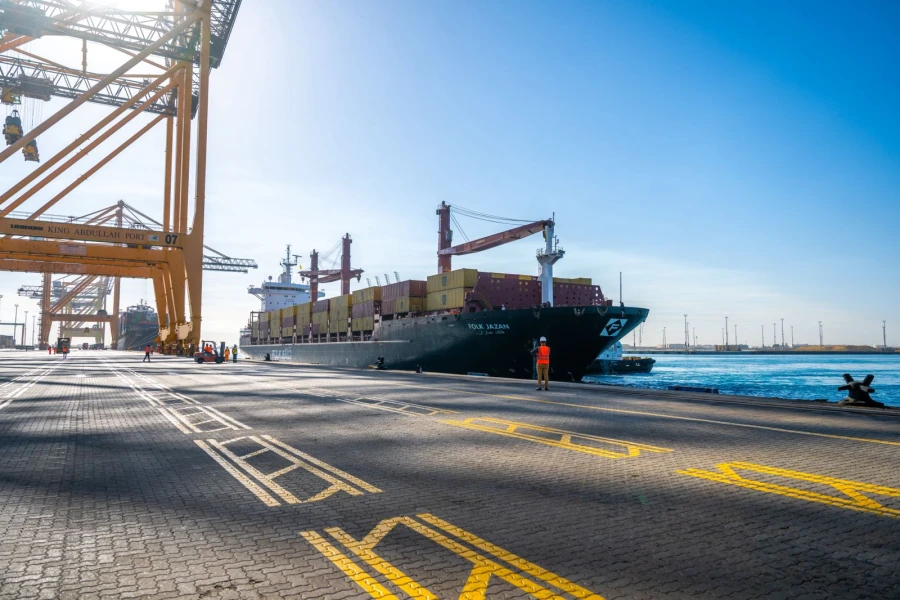
PIF’s Folk Maritime Adjusts Routes to Capitalize on Red Sea Shipping Trends
In response to significant changes in regional maritime transportation, Folk Maritime, a subsidiary of the Public Investment Fund (PIF) of Saudi Arabia, is realigning its shipping routes to focus more on the Red Sea. This strategic pivot comes as shipping companies increasingly reroute their vessels away from the Arabian Gulf, with Jeddah Port emerging as a vital center for container traffic and supply chain stability.
The Red Sea has seen a surge in shipping activity due to its strategic location and favorable logistics for global trade. Jeddah Port, in particular, has positioned itself as a key player, accommodating an influx of container traffic that has previously relied on ports in the Arabian Gulf. This shift is attributed to various factors, including geopolitical tensions and economic considerations that have prompted shipping companies to seek more secure and efficient routes.
Folk Maritime’s decision to redirect its operations reflects a broader trend within the maritime industry, as companies adapt to changing market dynamics. The move aims to enhance the company’s competitive edge while addressing the growing demand for reliable shipping options in the region. By focusing on the Red Sea, Folk Maritime intends to leverage the port’s capabilities to ensure a more stable and efficient supply chain for its customers.
Experts note that the Red Sea’s emerging status as a shipping hub could significantly impact regional trade. The port’s modern infrastructure and increased capacity allow for greater handling of container traffic, which is crucial for meeting the demands of global supply chains. This development is particularly beneficial for businesses operating in the Arab-American community, as it opens up new opportunities for trade and commerce.
Furthermore, this shift in maritime routes is expected to foster economic growth in the region. By enhancing Jeddah Port’s role in international trade, local businesses may benefit from improved access to global markets. This could lead to increased investment and job creation, further strengthening the economic landscape for Arab-American entrepreneurs and stakeholders.
As Folk Maritime moves forward with its revised shipping strategy, the implications for regional trade and logistics are significant. The ongoing developments in the Red Sea will likely continue to shape the future of maritime transport in the region, offering new avenues for growth and collaboration among businesses.
In conclusion, Folk Maritime’s strategic adjustments to its shipping routes highlight the evolving nature of maritime transport in response to geopolitical and economic shifts. With Jeddah Port at the forefront, the Red Sea is poised to become a critical artery for regional trade, providing new opportunities for businesses, including those within the Arab-American community, to thrive in an increasingly interconnected global economy.