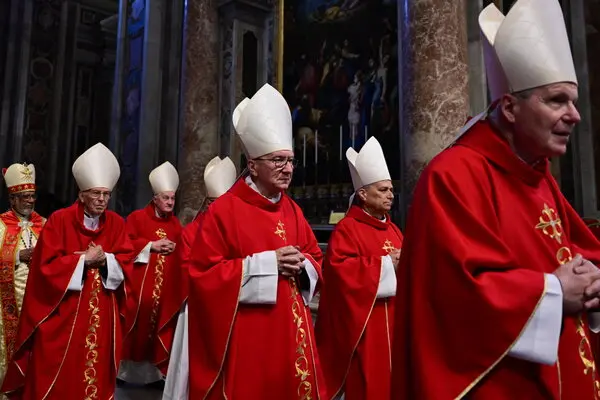
Cardinal Parolin Responds to Trump’s Criticism of Pope Leo
In a recent statement, Cardinal Pietro Parolin, the Vatican’s Secretary of State, expressed his surprise at U.S. President Donald Trump’s critical remarks regarding Pope Leo. The comments come in light of ongoing discussions concerning the Iran war and follow a wave of diplomatic engagements between the Vatican and the United States.
Cardinal Parolin characterized Trump’s attacks on the historical figure of Pope Leo as “strange,” reflecting a sense of bewilderment over the president’s choice to target a prominent religious leader from the past. While he refrained from delving into personal judgments or evaluations about the nature of Trump’s comments, Parolin’s remarks suggest concern over the implications of such rhetoric in the context of international relations and religious discourse.
The timing of these remarks is particularly notable, as they precede a scheduled meeting between U.S. Secretary of State Antony Blinken and Pope Francis. This meeting is expected to address a range of pressing global issues, including the ongoing challenges posed by the Iran conflict and the broader implications for peace and diplomacy in the region.
Parolin’s comments reflect the Vatican’s commitment to fostering dialogue and understanding between different nations and cultures, a mission that can be complicated by politically charged statements from world leaders. The Cardinal’s call for measured discourse highlights the importance of respectful engagement, especially in matters that intertwine politics and faith.
The Vatican has historically played a role in mediating conflicts and advocating for peace, and Parolin’s response underscores the institution’s dedication to these principles. By addressing Trump’s remarks, the Cardinal aims to redirect the conversation towards constructive dialogue rather than divisive rhetoric.
As the world watches the developments in U.S.-Vatican relations, the outcome of Secretary Blinken’s discussions with Pope Francis may have significant implications for future diplomatic efforts, particularly in the Middle East. The Vatican’s perspective on these issues is crucial, given its moral authority and historical involvement in peacebuilding initiatives.
In summary, Cardinal Parolin’s comments serve as a reminder of the delicate interplay between politics and religion, particularly in a time when tensions are high. The Vatican’s approach, as articulated by Parolin, emphasizes the need for respectful communication and the pursuit of peace, a message that resonates with many in the Arab-American community and beyond.